
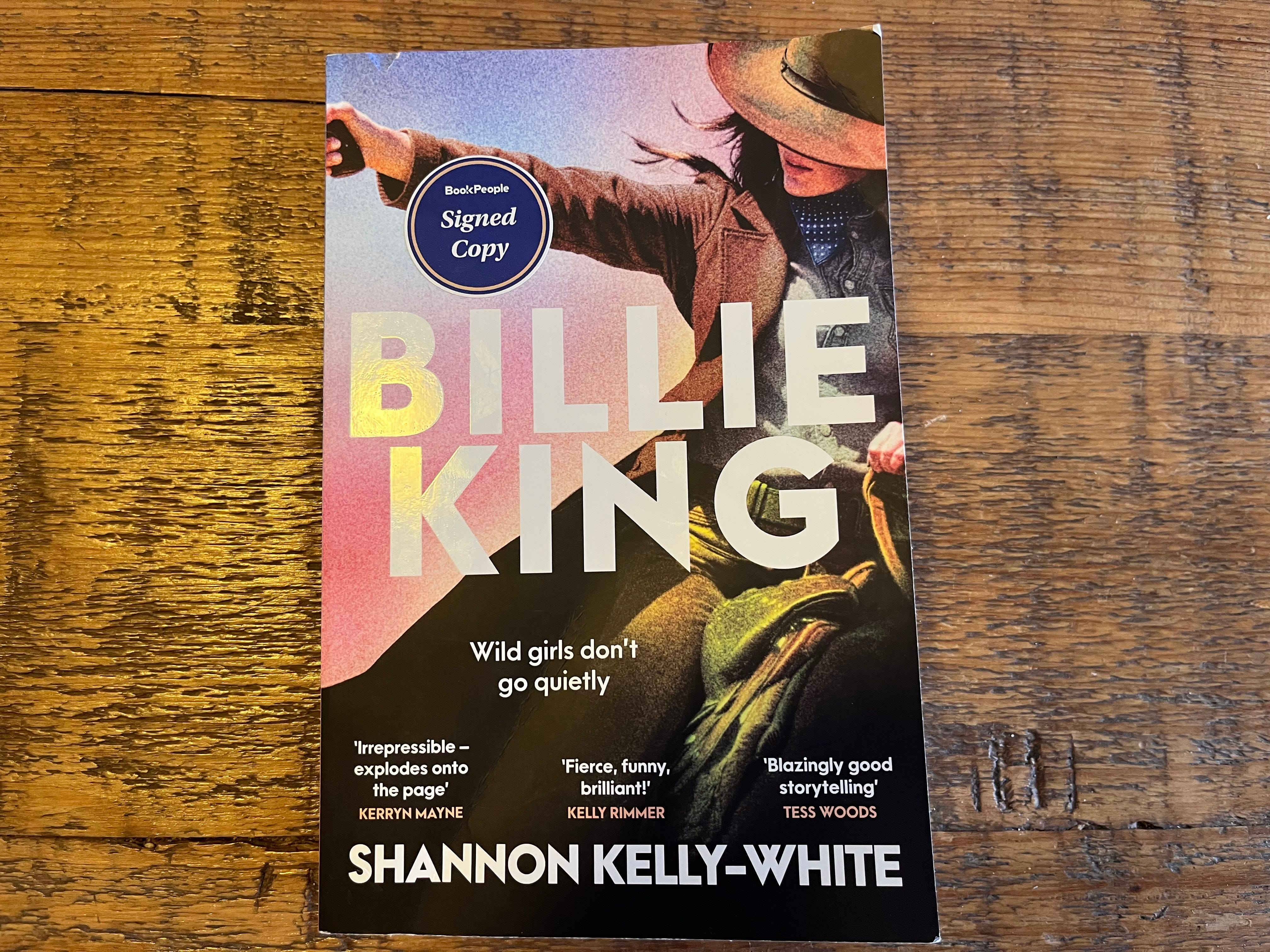
Mastering the voice of a twelve-year-old girl is the first thing Shannon Kelly-White gets right in her debut novel, Billie King. So often in books a child carries inside them a preternatural wisdom, necessary to be imparted on all adults who encounter them. They speak with the experience and occasional weariness of middle or even elderly age and appear to have seen it all dozens of times more than every other character who has at least four decades of life on them. They are never frightened, impatient, cold or hungry. Sometimes this can be charming, but often it can be a tedious device to easily make the adults around them understand an important life lesson.
The title character in this Australian feminist western may be whip-smart, fearless, and decent with a slingshot and a saddle, but she is still very much a child: missing her mother, too often left adrift to her own devices by her father. Enter a female bushranger on a mission to complete one last job and throw Billie’s quest to make some cash before the cruel town overlord seizes her home, and forces her into a children’s home, and we have the makings of a terrific adventure story.
Billie King is steeped in sadness – lost parents, lost children, a land of abandoned hopes and dreams – but Kelly-White keeps the story moving along at brisk pace, and with brilliantly-written humour. In doing so, she succeeds in making her characters funny, rather than just sliding jokes onto the page.
The story is told through the voices of three women, across two timelines: in 1930, we are with Billie and the female bushranger Dulcie James, on the run for multiple murders. In 1918, we are inside the long-ago diary of Anna, Billie’s mother, who disappeared shortly after an encounter with Dulcie in their run-down farmhouse in the fictional outback town of Orilong. Billie is struggling to shrug off the attention of child services, concerned about her father’s alcoholism, her frequent absences from school, and the repeated trouble she lands in from the cruel nuns on the day she does make it to the classroom. Dulcie is exhausted from both life on the run and the circumstances that led her to it. In the past, Anna is frustrated and furious by her downtrodden circumstances and the forces at play that have kept her trapped in a nowhere town. She is also a young woman adjusting to the relentlessness of motherhood, following the unintended arrival of Billie.
Kelly-White infuses her characters with a spirit that is never unearned. They are tough because they have always had to be. A country woman herself, there is an authenticity to every person who appears in Billie King, their flaws always delivered with a human touch. There is never any punching down on those in the book who are down on their luck and perhaps make poor choices because of it. This is portrayed most tenderly through Ken King, Billie’s father, a war veteran and hard drinker, being unable to keep his small family afloat and dangerously close to losing it all.
For a debut, Billie King is remarkably assured, but it never insists upon itself. This is most apparent in the captivating closing act, which in a clumsier novel would have stretched the limits of plausibility. Instead, it is a ripping finale to a cracking novel. One for the women and forces of nature in your life.