
If I were to attempt to recruit a reader, a true believer, to William Boyd’s fiction, his spy novels would not be my bait. Clever and enjoyable as they are, these novels are not the books where Boyd’s depth as a writer is at its most astonishing. As Neighbourhood Review is in its infancy, it is perhaps reckless of me to set a challenge to our fledging readership. So, what I will say is that I believe it is difficult to finish Any Human Heart – Boyd’s whole of twentieth century epic of the extraordinary life and quotidian struggles of a single man – and not feel permanently altered by the weight and beauty.
The Dax trilogy (Gabriel’s Moon, The Predicament and Cold Sunset) is not Boyd’s most immersive or memorable work. Breezier than the acclaimed and disturbing Brazzaville Beach, or the classic The Blue Afternoon, this Cold War trilogy still delivers in wit, crisp language and clever plotting.
Dax is literature’s best kind of spy: an accidental one. His job as a travel writer offers an ideal cover for missions. The three books see Gabriel have encounters with dozens of famed, real-life Cold War and twentieth century figures, including the subsequently assassinated Congolese Prime Minister Patrice Lumumba (Gabriel’s spying career essentially launched when he is invited to interview Lumumba while on assignment in Leopoldville); and US President John F Kennedy.
Boyd recently told The Times that the series was born as a television production idea at the request of the BBC for a “Sixties spy caper series”, but when the BBC did not proceed with making the show, he opted to adapt them into books instead, following in the steps of his previous successful spy novels Ordinary Thunderstorms, Restless and Solo.
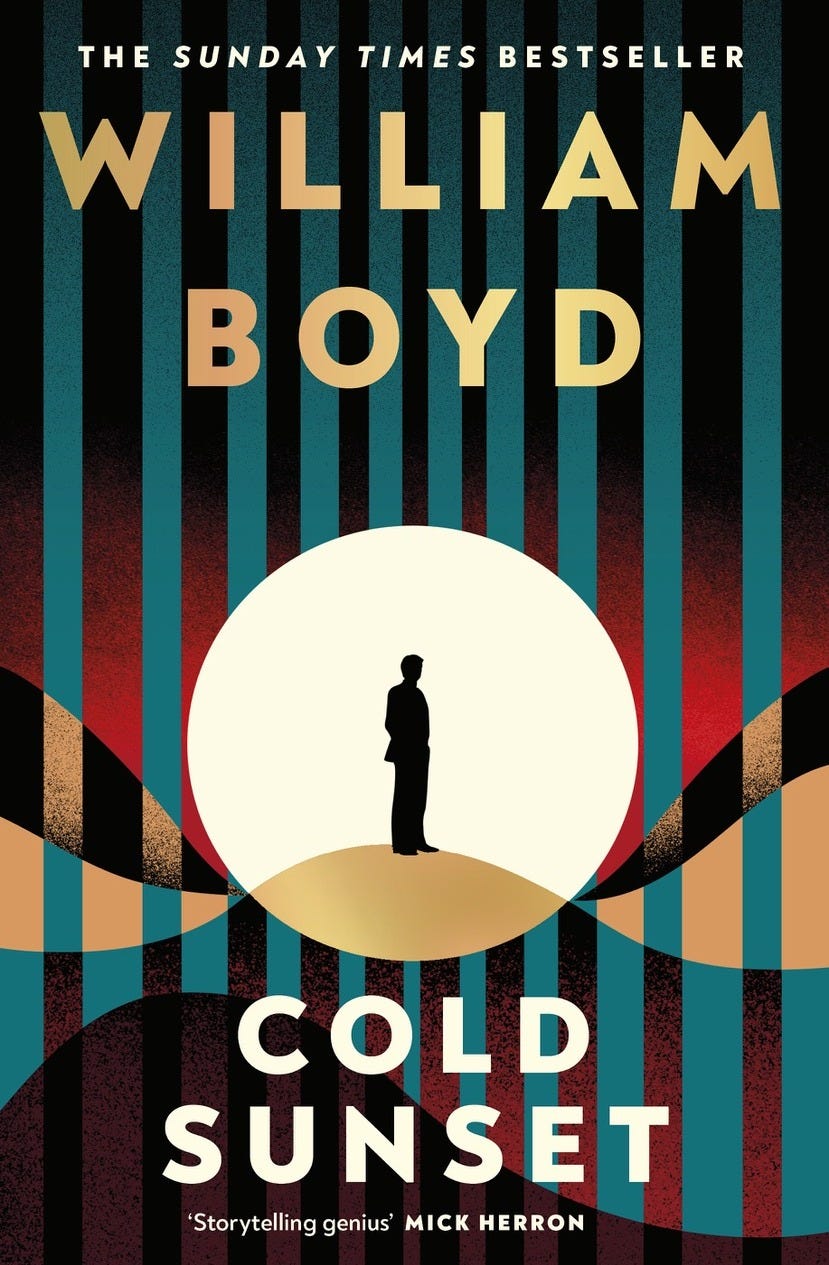
As a finale in this set, Cold Sunset, is the sharpest of the series, as Gabriel is sent to Moscow to help exfiltrate M16 asset Kit Caldwell by sneaking through the Finnish border, an endeavour with shades of the real-life escape of Russian double agent Oleg Gordievsky. Venturing into the Soviet Union is the riskiest of his missions so far, the stakes astoundingly high for an amateur writer with a working knowledge of spy craft to pull off.
Boyd excels at infusing history and its most famous figures into his works of fiction. In Any Human Heart, Logan Mountstuart meets Virgina Woolf, Ian Fleming, Ernest Hemingway and the Duke and Duchess of Windsor and, as a reader, I never felt a beat of implausibility, because every scene of these extraordinary interactions is textured with the stumbles and foibles of a mostly good but also deeply perplexing man. Gabriel is no Logan, but there is just enough of his back story revealed, most critically a childhood tragedy that haunts him into adulthood with torrid dreams and relentless insomnia, to keep us wanting to go along with him. Otherwise, most of the time, Gabriel’s character is positively soaked in gin or red wine, living on sandwiches, while falling for or being frantically courted by every other female character.
After finishing the series last week, I realised I liked Gabriel because of his unspoken optimism. His is a resilience that is not especially brave, but it persists nevertheless. He accepts his absurd new career with, if not grace, then certainly an admirable matter-of-factness. At moments, Gabriel’s greatest stake in remaining alive is to set out food for Cat, a feline that takes up residence in his apartment and always knows to return the day Gabriel arrives home from an exhausting mission. As Charles Dickens said, “what greater love than the love of a cat?”.
Less great is Gabriel’s abiding obsession and loose romantic entanglement with his cool and enigmatic M16 handler Faith Green is always described more than it is imagined, especially in The Predicament, where their interactions are at their weakest. The payoff comes in the final act of book three, an end note that will leave all Boyd fans hoping the author relents on keeping these books to a trilogy.