
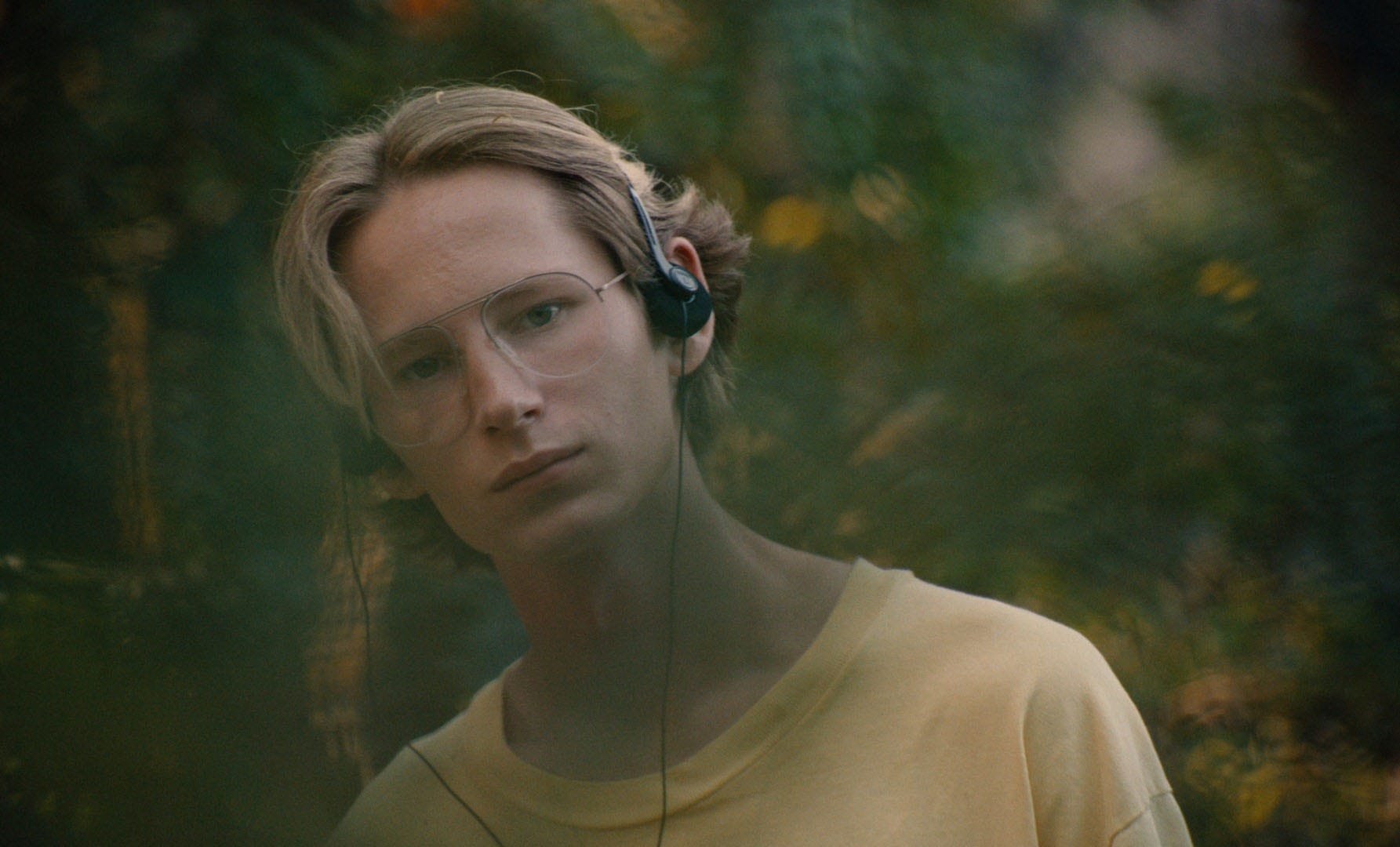
A Hungarian family moves to a house in the rural area of Vancouver Lake. Moving out adds stress to the mother (Iringó Réti) and the father (Ádám Tompa), especially when you have to do it with four kids: three boys (one a teenager) and a little girl. I had to do it once with two little girls, and we were going just one suburb over; I can’t imagine the pressure of doing this with four of them, especially when the teenager, Jeremy (Edik Beddoes), is at the edge of some strong psychological woes that may not be that typical for a teen.
The parents try everything, but can’t reach out to Jeremy, who quickly goes from defiantly not answering his mother to being in trouble with the local police force. The only time of nurturing emotion we see from Jeremy is when he hangs out with his siblings, especially the only girl, Sasha (Eylul Guven), representing Romvari. The scenes are fleeting, like our memory is. Little tender moments between siblings, connected with conversations between the parents that we assume a little girl wouldn’t be able to understand.
The distinctive touch of Romvari’s eye is that she frames everything like old photographs, with a keen attention to detail in exploiting the visual cues of the era. Every other director would film the 90s with overstylised looks (that more often than not just look like something from the 80s), but Romvari makes it so natural it brought me back to the days of firing up my Pentium I to waste time on Microsoft Paint. But the simplicity of Romvari’s method hides a more complex reality that should be celebrated. It’s like she’s flicking through a photo album, telling us little stories that mean nothing to anyone but herself. Drama isn’t constructed; it exists. So, something as simple as a child falling in a pool isn’t an excuse for a set piece for a big dramatic moment with a payoff, but an endearing snapshot that a child engraved in their mind, for an unexplained reason.
With a time jump, Romvari now follows an adult Sasha (Amy Zimmer) trying to piece together her memories of her brother. For a little bit, the style becomes colder, more clinical, like a documentary. Sasha arranges a meeting with a group of social workers, hoping that the past decades of psychological development could shine a light on her family. Instead, she finds solace in her imagined interpretations of her parents’ concerns, and in the testimony of people, other people Sasha didn’t know, who experienced Jeremy in a different way from Sasha.
Blue Heron reminds me in the best way of two other recent films that deal with childhood and memory, Lee Isaac Chung’s Minari and Charlotte Well’s thunderous and beautiful Aftersun. Romvari is in a conversation with Chung and Wells, but approaches her subject matter with a different kind of care. Away from the head-on heartwarmingness of Minari and the dreamlike closure of Aftersun, Romvari is more lyrical in her rendition of memory. The result is more subdued in its emotion, which makes it so that when it hits, it hits hard.
Romvari has delivered nothing but a tremendous achievement here. For a first feature, it has a distinct vision that very few directors reach after three or four films. There are bits that reminded me of the quiet demeanour of early Kelly Reichardt, or the stylistic beauty of Barry Jenkins, but Romvari makes this her own piece. What is art but a conduit for us to understand ourselves? Romvari turns her deepest concerns into a monumental artistic statement.
The plus: Romvari’s visual style and mise-en-scéne announce her as a serious filmmaker to follow.
The minus: It’s a vindication of a film that I found too small and too simple. Romvari’s idea had wings that could’ve gone to different places. In other words, I wanted more.