
When singer-songwriter Kacey Musgraves delivered her seventh album, “Middle of Nowhere”, in May, she delivered what might be the best album of the year. “Middle of Nowhere” strode confidently into the charts with its wry humour, unexpected candour, sweet melancholy atop honeyed melodies and an unexpected cameo from Miranda Lambert.
Admittedly, Musgraves was not high on my “must listen” radar until a music discovery podcast introduced me to “Dry Spell” in April. The past handful of albums have favoured pop hooks over a raw, imperfect, pared-back approach that is so endearing of her latest release. “Dry Spell”, replete with a very amusing (and fruity) video, laments the year of post-divorce, empty-bed loneliness that compels the protagonist to sit on her washing machine for satisfaction. “Dry Spell” is just one chapter in a story, which is the heart of country music, and having escaped - literally - to the middle of nowhere to seek respite from the busy city and a hectic music industry, Musgraves is reflecting on the nature of men and women trying to be people they’re not to appease each other, to avoid being alone, and the toll it takes. “Back on the Wagon” is a woman’s determined warning to other women that her man has given up drinking and gambling and is off-limits to all interested parties. But the standout track, one that has earned instant repeat status in my car and in the kitchen, is the gorgeous duet with fellow country music icon, Billy Strings. Stuck alone in a bar in Texas, the horse-riding, barn-cleaning, bale-stacking Musgraves observes a bar full of perfectly polished cowboy boots, spotless flannel shirts, unwrinkled cowboy hats and manicured nails. “I bet most of these boots have never seen any dirt, and the ground ain’t any softer if you’re wearing a rhinestone shirt,” she sings. “Everybody wants to be a cowgirl, ‘til it’s five in the morning and it’s cold as hell, and the work ain’t gonna do itself,” she shares. Then the killer lines: “Everybody wants to be a cowboy these days ... until it’s time to stay.”
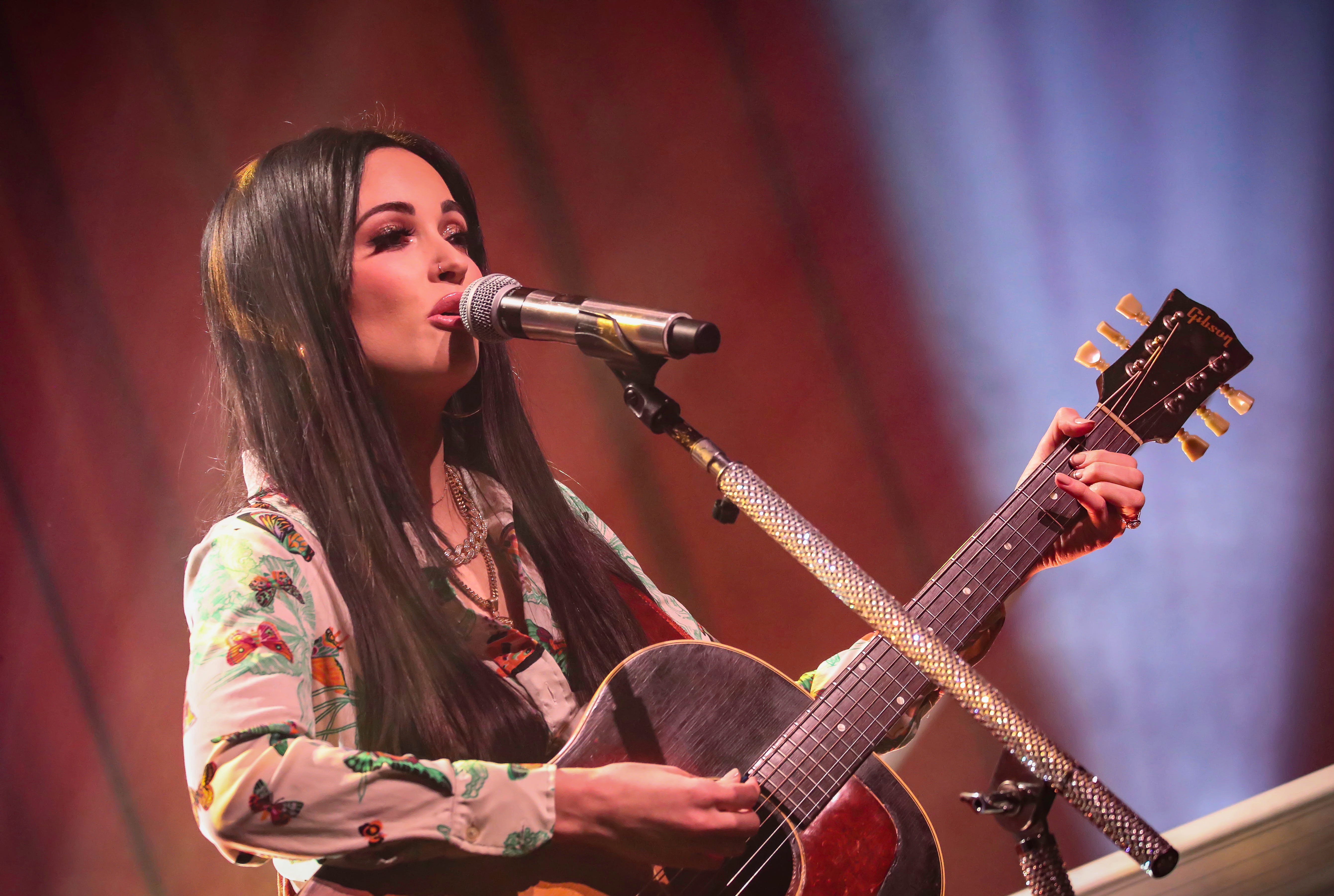
Singer-songwriter Kacey Musgraves plays at the Palace Theatre in St Paul, Minnesota. Image courtesy of Andy Witchger, CC BY 2.0, via Wikimedia Commons
Perhaps, such a sentiment could apply to the country music industry itself. A genuine respect for legacy has been coopted for popularity. Country has resurged in recent years with Beyonce’s country crossover, Ella Langley’s immense chart domination for an unashamedly old-school, twangy country classic referencing the “Texan Two-Step”, and the rise of the right-wing country bro dominating sales and stages. But, Musgraves is evidence of the gems to be found in a wealth of false, sparkly radio hits. She’s the real deal, and this is one of those albums you want to listen to start-to-finish, then start over again instantly. You should.
Incidentally, Kacey Musgraves will headline the inaugural Longhaul Festival in Australia alongside Kane Brown in January 2027.
Less likely to show up in tiny, rhinestone-bedecked booty shorts and hot pink cowboy boots than Musgraves, but equally worthy of your listening time is fellow American Margo Cilker who boasts an all killer-no filler new album of stunning, steel guitar-rich ballads of long drives, lonely nights, working to the bone for no dough, and beauty in tiny moments, all the time. Her third studio album, “Little White Cross”, came out on October 9.
The leading track, “Little White Cross”, is not an original – there are only a handful of Cilker’s own tracks - but she makes it sound so thoroughly heart-rending and personal that it could be. The song was written and originally recorded by Christy Hays, the tale of a reckless drive in a small town where boredom leads to deadly jaunts and desperate escapes.
Though Cilker has been likened to Lucinda Williams of the Pacific Northwest, such a comparison is lazy and didn’t occur to this longtime Lucinda fan. Cilker is her own artist, though she is in the guitar-boots-lonely highways school of no-bells-and-whistles, classic country. One of the few originals, “Maryhill Peaches, Goodnoe Pairs”, was co-written by Cilker and her husband Forrest VanTuyl. As Musgraves laments, nobody wants to do the work on a bone-chilling, pre-sunrise Texas morning, but this is how generations of Texan working class make a living on the land work (“It’s one day in the saddle for every ten in the truck. You can count up the miles, just don’t add ‘em up”). The salve for the suffering is the deep bond between neighbours, and a community that is committed to one another through the decades.
Don’t miss Cilker’s tale of a waitress, and single mother, on the acoustic waltz “Pauline”, enhanced by Eric Heywood’s pedal steel guitar (Cilker has called him her “secret weapon”).
Not many country music artists move from Texas to Los Angeles in search of a place that feels more like home. Nonetheless, Dallas-born troubadour Jess Williamson seems to have discovered a clarity of vision far from the dusty boots, all-night bluegrass bars, and line dancing masses in the bright lights and tall towers of LA. The revelation informed her third album, “Cosmic Wink” in 2018, followed by “Sorceress” in 2020, and then an unexpected treasure arrived. In 2022, Williamson collaborated with much-loved country singer-songwriter Waxahatchee (Katie Crutchfield) in a duo named Plains. Their album “I Walked with You a Ways” drew Williamson a new audience, or just renewed attention, and her solo album, “Time Ain’t Accidental” followed. However, it is the sixth, and latest, album “A Mile South of Heaven”, that affirms Williamson as a singer-songwriter with enormous agency as an artist, a woman, and a storyteller. As anyone knows, the melancholy and broken hearts, abandoned lovers, busted-up trucks on lonesome highways of country lyrics can’t shred your tender heart unless they’re lived in, worn to fray, and riding a tide of redemption and emotional rescue.
The first single, “Goodbye to All That”, epitomises the rootsy, guitar-heavy throwback to country women who battled for a voice in the male-dominated bars, clubs, stages, and radio. Think of Emmylou Harris, Linda Rondstadt - and, indeed, Lucinda Williams. There’s plenty of ruin and recovery, as promised in track titles like “Dark Day in Dallas”, “Someone Else’s Horses”, and “Battle Scar”. It is a tragic, wonderful emotional release to just surrender your ears and your spirit to the sound and let Williamson prove you’re safe in her hands.
There’s a couple of months to go, but get ahead of the mass recommendations and round-ups, and add Kacey, Margo, and Jess to your playlists.
Follow Cat’s writing here.

.jpg)