
Artist:Trentemøller
Album: Untitled
Label: In My Room, November 13 2026
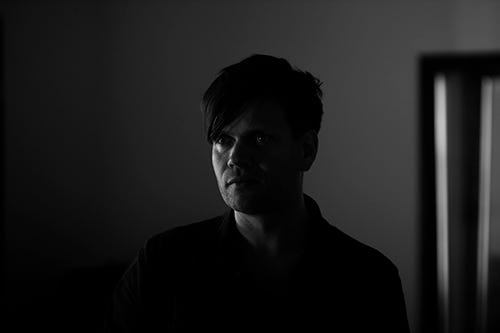
In the noisy, dance-punk scene spanning the decade from 2001, indie sleaze and electroclash - burnt out, no doubt - passed the baton to less frantic, more melodic Euro acts like Royksopp, The Knife, Robyn, and Trentemøller. The latter, a Danish producer and multi-instrumentalist, had transitioned from indie rock bands to his own modular, atmospheric electro compositions that traversed industrial bleakness through dubby, moody ambience. I discovered him on an obscure podcast, his track sandwiched between acts I knew and loved at the time: Autechre, Aphex Twin, Squarepusher and Depeche Mode. For the uninitiated, these artists all create in the vein of industrial, macabre, mathematical music-making, with a love for dark, atmospheric sounds.
With his latest album, as-yet-untitled, Trentemøller has emerged with a new sound after decades of electronic adventuring, live-meets-electronic compositions, and being a cult favourite of indie movie directors (including Pedro Almodovar) and fellow electronic acts. For his latest, the Copenhagen-based producer has crafted an album of collaborations, embracing the rawness of live instrumentation more, and ultimately, delivered a homage to the subcultures of the 1990s: shoegaze, grunge, emo, and nu metal.
The first singles, “Swerve” and “Terrified”, burst through the gates with ferocity. Layers upon layers of echo and guitar buzz push the limits of sensory overload in “Swerve”, harking to the addictive melodrama of Deftones, or the gothic ambience of My Bloody Valentine. The dreamy, sombre vocals of Vienna-based singer Sakura ride the wave-like momentum for all of a mere three minutes. She is a guest again on the aptly-named “Visceral”. For those who recall, and revere, Cocteau Twins, there’s plenty of that all-encompassing wall of ambient noise and somnambulic, lovelorn romance in the intimate female vocals, almost narcotic in quality. On the other hand, there’s a sweet poppiness to the bleepy lovesong “Terrified”, which wouldn’t sound out of place in a playlist next to Troye Sivan or Justin Bieber. Elsewhere, “Johnny Boy” delves into 1980s synth-pop, robotic dance and disembodied, Kraftwerk-era vocals.
The middle of the album, for those who still listen to full albums in chronological track order, takes that clubby, synth-pop vehicle for a good spin around the champagne and cigarette-studded dancefloor, before re-emerging into big guitar noise bangers. By the time “White Hallways” rounds out the album - concise at 10 tracks and radio-friendly length (average of 3.5 minutes each) - there’s a sense of having time-travelled through decades of gothy synthpop and the darker edges of where club culture meets snarly guitar rock, emerging from Coachella into the warm embrace of sunrise after an all-nighter.
For those who knew Trentemøller purely as a master of remixing dance tracks into lengthy, hypnotic club bangers over the last 20 years, this album may be revelatory. For those who discover him anew, it may inspire them to take a trawl through his back catalogue. That would be immensely rewarding if you love Depeche Mode as much as Deftones, Robyn as much as Royskopp and The Raveonettes.
